

Introduction
I often hear foreigners say that they have a hard time making Korean friends. They meet people at work, university, language exchanges, hobbies, or events, but somehow it can still feel difficult to become part of a Korean friend group.
But maybe part of the problem is not that Koreans don’t want to make friends with foreigners. Maybe friendship and friend circles are simply defined differently from what you are used to in your own country.
The first thing to understand is the Korean word 친구. It is usually translated as “friend,” but the meaning is a little more specific in Korean. Traditionally, 친구 often refers to someone who is the same age as you. To keep things simple, let’s just say someone born in the same year.
This sometimes creates a funny situation for foreigners. Koreans find out that you were born in the same year and happily say, “Oh, we’re friends!” You might think, “That was easy. We just became friends!” But you haven’t necessarily become close friends. What they often mean is that you are the same age and can relate to each other as 친구. Whether you actually become good friends comes later.
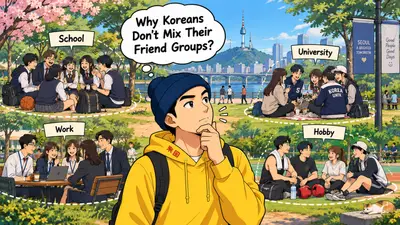
Another thing I slowly noticed after living in Korea is that many Koreans have several friendship circles that follow them through different stages of their lives. There are elementary school friends, middle school friends, high school friends, university friends, military friends, work friends, church friends, hobby friends, and many others.
What I found interesting is how separate these circles often remain.
Someone new might join for dinner once, but that doesn’t necessarily mean they have entered the group. You might instead become very close with one person and regularly meet them one-on-one without seeing the rest of their friends again.
At first, this can be confusing. You might wonder why your Korean friend never introduces you to their other friends or why you aren’t regularly invited to their gatherings. But it doesn’t necessarily mean you aren’t important.
You might simply belong to a different circle.
👉Why Koreans Don’t Mix Their Friend Groups
👉How to Make Friends in Korea?
👉What’s My Age in Korea?! - Explaining the Korean Age System
👉Why Koreans Don’t Invite You To Their Homes
What Does 친구 Actually Mean?
In English, “friend” is a broad word. You can have a friend who is 25 and another who is 40. The same is true with the German word “Freund.” Age isn’t normally part of the definition.
Korean relationships have traditionally been more sensitive to age. When two Koreans meet, one of the things they often figure out quite quickly is their age. It helps establish how they speak to each other and what kind of relationship they have.
If you were born in the same year, things become easier: “Ah, we’re 친구!” It creates an immediate feeling of being on the same level. Depending on the relationship, you might eventually switch from polite language to 반말 and interact more casually.
But 친구 can describe your age relationship without saying much about how emotionally close you are. At the same time, someone older than you can be one of your closest friends, but the relationship might naturally be described through words such as 형, 누나, 언니, 오빠, or 선배.
So when thinking about friendship in Korea, it helps not to translate every relationship directly into the English word “friend.”
Friendship Circles Follow Different Stages of Life
Someone in their thirties might still regularly meet their elementary or high school friends. Then they have another group from university, perhaps another from military service, and others from work, church, sports, or hobbies.
The interesting part is that these groups don’t always merge.
Your high school friends are your high school friends. Your university friends are your university friends. Your work friends are your work friends.
Of course, this isn’t a strict rule. People introduce friends and new groups form all the time. But from my experience, there seems to be less expectation that all these different parts of your social life eventually become one big network.
And it makes sense when you think about the history behind these circles. Imagine four people who have known each other since they were 15. They have almost twenty years of shared memories, embarrassing stories, relationships, university entrance exams, military service, first jobs, weddings, and everything in between.
You cannot really join that history later.
You can become close with the people in the group, but you weren’t there when that circle was formed. And that is okay.
Why Your Korean Friend Might Not Introduce You to Everyone
This is something foreigners can easily misunderstand.
You have been meeting a Korean friend for months. You regularly have dinner together, talk about personal things, and genuinely feel close. But somehow you never meet their other friends.
Eventually you might wonder, “Are we actually friends? Why don’t they invite me when they meet their high school friends?”
I don’t think being introduced to someone’s existing friend group is necessarily a good measurement of closeness in Korea. You might simply have your own relationship with that person.
Perhaps you met through climbing. You climb together and have dinner afterward. Meanwhile, they still meet their university friends every few months. Those two relationships don’t need to connect.
You might occasionally get invited to one of their gatherings. Everyone is friendly, you have a good evening, and then you never get invited again. That doesn’t necessarily mean anything went wrong. You were simply a guest in an existing circle.
Age can also make mixing groups a little more complicated. If someone brings together an older university friend, a younger colleague, and a same-age childhood friend, everyone has to figure out how to address each other, whether to use polite language or 반말, and how everyone fits into the group.
An existing circle already knows its own dynamic. Adding someone new changes that dynamic a little.
How This Feels Different From Germany
Growing up in Germany, I had different groups too. There were school friends, university friends, work friends, people I met through hobbies, and individual friendships.
So having separate friend groups is definitely not something unique to Korea. Germany can also have very established friendship circles, and entering an old German friend group as an outsider isn’t always easy either.
The difference I personally notice is more about how easily the circles mix.
If I had a birthday party in Germany, inviting people from several parts of my life wouldn’t feel unusual. A university friend might meet an old school friend. Someone might bring their partner or another friend. If everyone gets along, those connections can continue naturally.
I have experienced that in Korea too, but I notice more clearly that people often identify their groups by where the relationship came from: these are my high school friends, these are my university friends, these are people from work, these are my gym friends.
The origin of the relationship seems to remain part of the identity of the group for much longer.
Germany has circles too. Korea, from my experience, seems to keep the borders between those circles a little more visible.
Create Your Own Friend Circles
This realization changed how I approach making friends in Korea.
As foreigners, we sometimes imagine that success means being accepted into an existing Korean friend group. You meet one Korean person, they introduce you to five Korean friends, and suddenly you are part of the group.
That can happen, but it isn’t the only way to build meaningful friendships here.
You can build individual relationships. Maybe you regularly meet one friend for coffee, another for exercise, and someone else for concerts. Those relationships can be meaningful without everyone knowing each other.
And eventually, you start creating your own circles.
For me, this happened through things I was already interested in. I made friends through my MMA gym, startups and entrepreneurship, developer communities, meditation, and different international communities.
The important part is repeated contact. You don’t have to immediately ask someone to become your friend. You simply keep showing up. You train together every week. You attend the same events. You go climbing. You volunteer somewhere. Eventually someone asks if you want to get dinner afterward. A KakaoTalk group appears. A few months later, you realize you have your own little circle.
In a way, you are doing exactly what Koreans did when they were younger. Their school friendships became strong because they repeatedly spent time together in the same environment.
As an adult arriving in Korea, you didn’t attend their elementary school or university. But you can create new shared environments.
Stop Measuring Friendship Only by Invitations
It is easy to start measuring friendship through invitations.
“My friend went out with other people and didn’t invite me.”
“I’ve known her for two years and I’ve never met her childhood friends.”
If you come from a culture where close friends are expected to eventually mix, this can feel like you are being kept at a distance.
Sometimes that might be true. Not every relationship becomes a close friendship. But sometimes you may simply be applying your own definition of friendship to a different social structure.
Instead, look at the relationship itself. Does this person make time for you? Do you enjoy being together? Can you talk openly? Do they check on you when something happens? Can you call each other when you need help?
Those things probably tell you much more about the friendship than whether you have been invited into their high school KakaoTalk group.
There is also something beautiful about the way these old circles can survive. Some Koreans have friendships that stretch back twenty or thirty years. They might only meet a few times a year as work, relationships, marriage, and children take over their lives, but the circle remains.
When they meet again, they share a history that doesn’t need to be explained. Maybe that is also why these circles don’t always need new people. Part of their value comes from the history they already share.
Maybe Making Friends in Korea Isn’t Harder, Just Different
I don’t want to make a general rule that all Koreans organize their friendships this way. People are different. Some love introducing everyone they know to each other, while others keep different parts of their lives completely separate.
But after living here for several years, I have noticed this pattern often enough that it changed how I think about friendship in Korea.
If you are struggling to make Korean friends, maybe don’t focus too much on getting invited into an existing circle. Build individual relationships. Find activities you genuinely enjoy. Go somewhere regularly enough that people start recognizing you. Create shared experiences and give it time.
You might never become part of someone’s elementary school group, university group, or military group.
You weren’t there for that chapter of their life.
But you can become part of a new chapter.
Maybe friendship in Korea isn’t always about entering someone’s existing circle. Sometimes you create a new circle of your own.
🏠 Looking for Housing in Korea? Renting Made Easy!
10% Off Service Fee with code:
KIMNINJA10
Enkostay Benefits:
✅ No Deposit ✅ Online Booking ✅ Immigration-friendly docs ✅ Flexible Contracts
Perfect for:
👨🏻💻 Digital Nomads 🎓 Students ✈️ Long-Term Travelers 🧳 Working Holiday
📬 Weekly Tips in Your Inbox
Whether you’re visiting, staying long-term, or relocating. I share honest insights, guides, and tools to help you navigate life in Korea.
Join 1,000+ readers learning how to live smarter in Korea, from visas to vibes.
👋 About Kim Ninja

Kim Ninja (Nguyen Huy Kim)
🧭 Cultural Guide · ✍️ Storyteller · 🎨 Curator
📢 Creator helping foreigners understand and thrive in Korea
🗺️ I turn everyday challenges into comics, guides, and stories
The blog published by Kim Ninja (Huy-Kim Nguyen) is available for informational purposes only and is not considered legal advice on any subject matter.