

Introduction
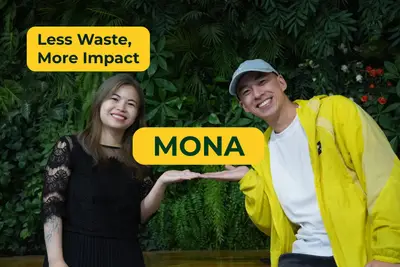
When I sat down with Quinn Phan, the founder of Mona, I expected that we would mostly talk about her startup, sustainability, and what it is like to build a company as a foreigner in Korea.
But the more we talked, the more I realized that Mona is really just the latest chapter of a much longer story.
Quinn is Vietnamese American and has lived in Korea for more than ten years. She has been an English teacher on a remote Korean island, worked at a startup, taught English again, opened a vegan bakery in the middle of COVID, expanded it into a restaurant, created a sharing community with more than 16,000 members, and eventually closed a perfectly working restaurant to start all over again with Mona.
There is a pattern here.
Every time Quinn seems to have figured something out, she somehow finds another challenge.
She joked during our conversation that maybe she simply hadn’t “suffered enough” yet.
But underneath that joke is something I recognize in many founders. Once you know how to solve one problem, your attention starts moving toward the next one.
And for Quinn, that next problem became Mona.
Korea Wasn’t Really the Plan
Quinn first came to Korea in 2011 after graduating from university in the US. She had studied abroad in Japan and wanted another experience before settling into a regular job. Korea was still mostly unknown to her. Her mother watched K-dramas, so she had seen Korea through those, but she hadn’t actually been here herself.
She found a government teaching program and thought, why not?
She was assigned to an island with around 2,000 people. She didn’t speak Korean beyond a few basic words and was the only English speaker there. Her teacher dormitory was next to the school, with rice fields in front, mountains behind it, and the beach within walking distance.
It sounds almost like the opposite of how many foreigners experience Korea today. There was no Gangnam, startup networking, international community, or carefully planned Korean lifestyle.
She was simply thrown into Korea.
And she loved it.
The teachers brought her along for dinners, karaoke and even sauna trips despite barely being able to communicate with each other. She became attached to her students and slowly started experiencing Korea through the people around her.
One thing she learned from this time was to “keep your cup empty.”
You can prepare yourself for living in another country, but eventually you will encounter things that don’t fit what you know. Quinn had already lived in different cultural environments and studied in Japan, but Korea still gave her plenty of cultural shocks.
Instead of immediately deciding whether something was good or bad, she learned to first experience it.
That first adventure turned into around three and a half years in Korea. She studied Korean at Sogang University and worked at a startup before eventually deciding that perhaps it was time to return to the US and get back to “reality.”
Three years later, she quit her job in America, packed one small carry-on and bought a one-way ticket to Japan without much of a Plan B.
After a month there, she came back to Korea to visit friends.
She has been here ever since.
Sometimes I think that is how people actually end up living abroad long term. It isn’t always one big decision.
You stay for one year. You make friends. You leave. You come back. You find another opportunity. Eventually the place that was supposed to be temporary becomes home.
From English Teacher to Bakery Owner
When Quinn returned to Korea in 2018, she knew she wanted to stay, but that didn’t mean she immediately knew what to do with her life.
She looked for jobs outside of English teaching, but eventually ended up teaching again, this time adults one-on-one.
There was nothing necessarily wrong with the job. Teaching provided stability and a visa, and Quinn even considered getting further qualifications for teaching adults.
Then COVID happened.
The teaching business was affected and Quinn suddenly had to figure out what came next.
At the time, she had started baking again as a hobby. She used to bake in the US and would share what she made with students and coworkers. Some ingredients were harder to find in Korea, which eventually pushed her toward vegan baking.
Opening a bakery had also been an old dream of hers. Facebook would occasionally remind her of posts from years earlier where she had written that she wanted to own a bakery or cafe one day.
So in the middle of COVID, while restaurants and cafes around the world were struggling, Quinn apparently decided this was a good time to open one.
From making the decision to opening the bakery took around three weeks.
Even she doesn’t recommend doing it this way.
The first shop was tiny, around six or seven pyeong. But people came. Friends sent flowers and plants from other parts of Korea and even from the US. For Quinn, opening the bakery also made her realize how many relationships she had quietly built during all those years in Korea.
A year later, she expanded into a cafe and restaurant several times larger.
She had survived COVID. The restaurant was working. She had customers. She knew how the business operated.
Which apparently meant it was time to make her life difficult again.
The Idea Behind Mona Started Long Before Mona
One thing I found interesting about Mona is that it wasn’t really one of those startup ideas where someone sits down and thinks, “What company should I build?”
The idea had been developing around Quinn for years.
Back in 2019, she created a Facebook group around a very simple concept: if you have something you don’t need anymore, give it to someone who does.
No selling. No exchange. Just sharing.
The group eventually grew to more than 16,000 members. People moving away from Korea could give away things that weren’t worth selling. Someone else could still use them instead of those things ending up in the trash. Businesses eventually started joining too.
At the same time, Quinn was running her restaurant and seeing waste from the other side.
Restaurants sometimes have food that is still perfectly edible but can no longer be sold. Businesses have products approaching expiration dates, old inventory taking up storage space, furniture being replaced, cosmetics, clothing and other things that still have value.
The easiest solution is often to throw them away.
Not necessarily because businesses want to waste things, but because doing something else can become surprisingly complicated.
Who can take the products? How do you find the right charity? Can they accept that type of food? Who handles transportation? What about liability? What happens if the products expire soon? Is all the work even worth it?
Throwing something away can unfortunately be easier than giving it away.
That is the problem Mona tries to solve.
Today, Mona connects businesses with charities that can use their surplus inventory. The company helps handle redistribution while giving businesses benefits such as reduced disposal costs, potential tax benefits and ESG reporting. Mona describes its mission as turning surplus products into measurable social and environmental impact rather than waste. (MONA)
The interesting part is that Quinn had experienced almost every side of this problem herself before starting the company.
She had built the sharing community.
She had run the restaurant.
She had thrown away food she wished someone could still use.
And she had seen businesses joining the community because they were facing the same problem on a larger scale.
Mona wasn’t really a new idea anymore. It was a problem that kept appearing in different parts of her life.
Closing a Working Business to Start Again
Starting Mona also meant Quinn had to make a decision that I think says a lot about her as a founder.
For around six months, she tried to run Mona and the restaurant at the same time.
Eventually, she realized that this wasn’t going to work.
The restaurant needed her attention. Mona needed her attention. Trying to do both meant neither could really move forward.
So she had to choose.
The safe choice would probably have been the restaurant. She already knew the business. It had survived COVID. She had customers and even had ideas for turning it into a vegan Vietnamese home-cooking restaurant.
Instead, she closed it and chose Mona.
Shortly after she focused on Mona full time, the company got an important success case. But that didn’t suddenly make everything easy.
It just gave her another reason to keep going.
“Just a Little Bit More”
I think this was the part of our conversation that showed me the founder behind Mona more than anything else.
I asked Quinn whether she ever reached the point where she wanted to give up.
Of course she had.
She described something many founders probably recognize. In the beginning, there is excitement. You are building something new and everything feels possible. But after a few years, that honeymoon period disappears.
Then you start asking harder questions.
Is this actually going to work?
How long am I willing to keep doing this?
Should I stop?
Quinn had reached that point with Mona too.
A few months before our interview, she had started seriously thinking that maybe she had done enough. She had tried. She had applied to programs. She had pushed the company forward. Perhaps it was time to consider another option.
Then, on the day she had more or less decided she might quit, Mona got accepted into one of the government programs she had applied for. Around the same time, one of their large clients decided to renew for another year.
Her reaction was basically: “Now I cannot quit. Why are you guys doing this to me?”
The way she described it was like hitting the snooze button in the morning.
Just five more minutes.
For Mona, it became: just a little bit more.
See what happens after this program. Finish this project. Try this partnership. Reach the next milestone.
And then suddenly you have gone much further than you thought you could.
I don’t think perseverance always means having endless confidence that everything will work out.
Sometimes perseverance looks more like being tired, questioning everything, thinking about quitting, and then finding one reason to continue a little longer.
Building an Impact Business Is Still Building a Business
There is another conflict Quinn has to constantly navigate with Mona.
She cares deeply about the impact.
She doesn’t like seeing things go to waste when somebody else could still use them. She wants businesses, charities and communities to benefit from sharing instead of simply throwing things away.
But good intentions don’t automatically create a sustainable company.
Mona still needs clients.
The clients need to see financial value.
The company needs revenue.
Employees need to be paid.
The service has to solve a problem well enough that businesses continue using it.
Quinn talked quite openly about this tension. Making an environmental or social impact is important to her, but she also has to look at Mona from the client’s perspective. If a business doesn’t receive enough value from the service, the impact alone might not be enough.
That is why she keeps coming back to the idea of a win-win.
Can Mona reduce waste while saving a company disposal costs? Can a charity receive something useful while the company receives ESG data or tax benefits? Can doing something environmentally good also make economic sense?
For Quinn, that is where an impact business becomes an actual business rather than simply a good cause.
Mona has since grown beyond that original Facebook community. Its own website says it has built more than 50 corporate partnerships and run pilots across six industries. (MONA)
But growth also creates more pressure.
Quinn admitted that she often feels like she isn’t doing enough, even when people around her tell her the opposite.
There is always another client, another program, another partnership, another problem.
That feeling probably doesn’t disappear just because the company becomes bigger.
Being a Foreign Founder in Korea
Then there is another layer to all of this.
Quinn is building Mona in Korea as a foreigner.
Her Korean ability gives her an advantage, but even then she often finds herself as the only foreigner in Korean startup programs. Applications can be 15 pages long. Interviews, pitches and presentations can all be in Korean. Much of the government startup ecosystem was simply not designed around someone who doesn’t speak the language.
But Quinn also doesn’t believe that this means you cannot build a company here without speaking Korean.
She knows foreign founders who have done exactly that.
You simply have to understand what your disadvantages are and build around them.
During our conversation, she reduced it to three things: the product, the timing and the network.
The network part is something both of us kept coming back to.
You need to put yourself out there.
You need people to know what you are working on. You need to talk to other founders. You need people who understand the Korean ecosystem better than you do. You need someone you can ask when you run into something you have never seen before.
Especially as a foreigner, trying to figure everything out alone makes an already difficult path unnecessarily harder.
Should You Start a Business in Korea?
Towards the end, I asked Quinn what she would tell someone who just graduated from university and dreams about coming to Korea to build a startup.
I expected something like: get a few years of work experience first.
Her answer was more open.
Come to Korea and experience it.
Maybe stay for a month. Meet founders. Go to events. Look at the startup ecosystem. See what daily life actually feels like. Then decide whether this is really where you want to build something.
I agree with this.
There can be a big gap between wanting to live in Korea and actually building a life here.
There is an even bigger gap between visiting Korea and running a company here.
You can read hundreds of articles, watch videos and now ask AI almost anything about living in Korea. But none of those things can experience Korea for you.
Quinn put it quite simply: nobody can experience your experiences for yourself.
Maybe you come here and love it.
Maybe you realize after a month that this isn’t the place for you.
Both are useful answers.
And if you do want to build something here, start meeting people early. Don’t wait until your visa is expiring or your startup is running out of money before suddenly trying to build a network.
The people who have already been through these problems can often save you from making the same mistakes.
Finding a Problem Worth Suffering For
Towards the end of our conversation, we somehow started talking about suffering.
Which is probably appropriate when two founders talk for long enough.
Quinn said that founders seem to have a strange relationship with it. You solve one problem and then voluntarily choose another one. You reach one finish line and decide to start another marathon.
But I think there was something more interesting underneath what she was saying.
You get to choose which problems are worth your energy.
Every business will have problems. Every job will have problems. Every relationship and every life will have problems.
The question isn’t how to create a life without them.
The question is which ones you care enough about to keep solving.
For Quinn, Mona still seems to be one of those problems.
There are days when she questions it. There are moments when she thinks about stopping. She feels the pressure of constantly having to do more, while also reminding herself that her identity cannot become completely tied to the company.
She even talked about having to consciously do things for herself again because people had started associating her so closely with Mona that the two almost became the same thing.
That might be one of the harder parts of being a founder that doesn’t show up in startup pitches.
At some point, the thing you created can start consuming so much of your life that you have to remind yourself that you still exist outside of it.
Yet she continues.
Not because she knows exactly how Mona will look in five or ten years. She doesn’t.
Her bigger goal is actually much simpler: to keep doing something she enjoys and be happy doing it. Maybe that will still be Mona. Maybe one day it will be another business. She already has plenty of ideas.
But the theme seems unlikely to change.
Community. Sharing. Impact. And somehow finding a way to turn those things into a sustainable business.
Looking back at Quinn’s journey, Mona doesn’t feel like a startup she suddenly decided to create.
It feels like something that slowly emerged from everything she had done before.
Teaching on an island taught her how to enter a country with an empty cup. Coming back to Korea taught her that your path doesn’t always need a plan. The bakery showed her the community she had built around herself. The restaurant showed her the waste businesses deal with every day. The sharing group showed her that people will give things away when you make it easy enough.
And Mona brought all those pieces together.
For foreigners who want to build something in Korea, I think that is more useful than another story about someone having a great idea and becoming successful.
You probably won’t know exactly where you are going when you start.
Quinn didn’t either.
Sometimes you try something, learn from it, move to the next thing, almost give up, continue a little longer, and eventually look back and realize that none of those experiences were as disconnected as they seemed at the time.
You were slowly finding the problem you were willing to keep solving.
🏠 Looking for Housing in Korea? Renting Made Easy!
10% Off Service Fee with code:
KIMNINJA10
Enkostay Benefits:
✅ No Deposit ✅ Online Booking ✅ Immigration-friendly docs ✅ Flexible Contracts
Perfect for:
👨🏻💻 Digital Nomads 🎓 Students ✈️ Long-Term Travelers 🧳 Working Holiday
📬 Weekly Tips in Your Inbox
Whether you’re visiting, staying long-term, or relocating. I share honest insights, guides, and tools to help you navigate life in Korea.
Join 1,000+ readers learning how to live smarter in Korea, from visas to vibes.
👋 About Kim Ninja
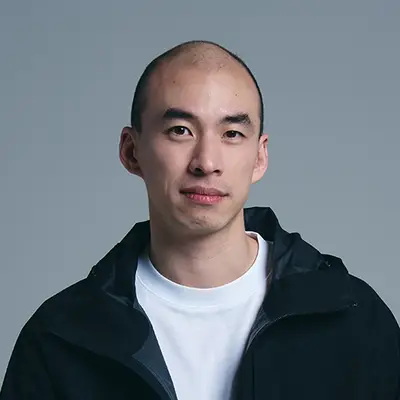
Kim Ninja (Nguyen Huy Kim)
🧭 Cultural Guide · ✍️ Storyteller · 🎨 Curator
📢 Creator helping foreigners understand and thrive in Korea
🗺️ I turn everyday challenges into comics, guides, and stories
The blog published by Kim Ninja (Huy-Kim Nguyen) is available for informational purposes only and is not considered legal advice on any subject matter.