

Introduction
Are you a software developer dreaming of working in Korea? The tech scene is growing, opportunities are emerging, and the country offers a unique blend of innovation and culture. But how realistic is it to find a job here as a foreigner?
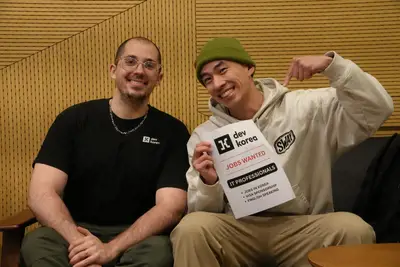
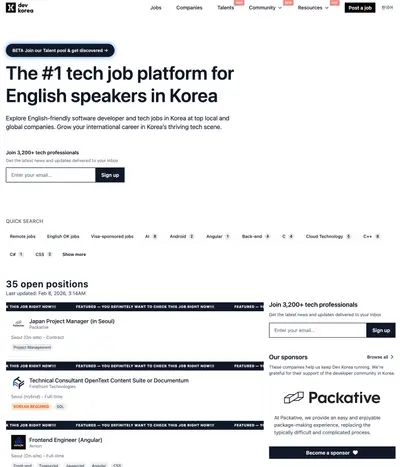
I sat down with Florian Ludot, founder of Dev Korea, to get the real story. Born and raised in France with a background in computer science, Florian moved to Japan after graduation, ran a company there for six years, then relocated to Korea to start fresh. What began as a simple community meetup evolved into Dev Korea, now the go-to platform for English-speaking developers looking for tech jobs in Korea.
Here's what he shared about finding work, navigating Korean work culture, and building a successful platform from scratch.
👉What Visa Should You Get In Korea? A Complete Guide Based on Age and Life Stage 👉Why Mentorship Matters When You’re Starting Out in Korea

🚀 The Birth of Dev Korea: Solving a Problem Nobody Else Would
Florian didn't set out to build a job platform. In fact, he never struggled to find work himself. But when he started the Seoul iOS meetup community, he noticed a pattern:
"People kept asking me, 'Hey Florian, do you know where to find a job in Korea? I can't speak Korean, so I can't use the traditional platforms. What should I do?' And I was like, 'I have no idea.' After hearing this from 10, 20 people, I thought—okay, there might be something to be done here."
So he went home, opened Figma, and built the first version of Dev Korea in just 3-4 days. No authentication, no fancy features—just the bare minimum to solve the problem.
The Chicken and Egg Problem
Every job platform faces the same challenge: job seekers want to see listings, but companies won't post unless there's traffic. Florian's solution? Manual curation.
He spent hours browsing Craigslist, LinkedIn, and Korean job sites, finding English-friendly positions and posting them himself. It was tedious, but it gave him deep insight into what companies were hiring for—and it saved job seekers countless hours of scrolling through Korean-only listings.
Word of mouth did the rest. Employees told their managers about Dev Korea. Developers shared it with friends. Three years later, the platform has helped hundreds find work, organizes monthly events with 100+ attendees, and has become a cornerstone of the English-speaking tech community in Korea.
💼 The Honest Truth: How to Actually Get a Job in Korea
Florian is refreshingly candid about job hunting—even when it doesn't paint his own platform in the best light.
The 70-20-10 Rule
Throughout your career, job opportunities typically come from:
- 70% from your network — referrals, recommendations, people you know
- 20% from recruiters — headhunters reaching out (more common with 5+ years experience)
- 10% from online applications — job boards, company websites
Yes, you read that right. Only 10% of jobs come from applying online.
"So technically, it's the worst way to get a job. And I'm a terrible salesman saying this, but this is the truth and I can't hide it."
Networking is Everything
Florian's top advice? Come to Korea and start networking immediately.
Korea has a strong coffee chat culture. Reach out to people on LinkedIn, attend meetups, go to tech events. Building relationships takes time—it's not a one-shot deal. But when companies hire, they often think of people they've met multiple times rather than random applications in their inbox.
"You meet someone for the first time, you talk. Then you meet them at a second event—oh, you're here again! You keep growing this relationship. Later on, maybe that person hears from their company, 'We're hiring this type of person.' And they think, 'Oh, there's that cool guy I met a couple times.'"
Even at Dev Korea, it's common for companies to post a job, get decent leads, but ultimately hire someone the CEO already knew.
🛠️ What Tech Stack Should You Learn?
Korea's tech demands vary by company size and industry. Based on job postings on Dev Korea, here's what's in demand:
🔥 High Demand Areas:
- AI/ML: Python is king. With Korea's push into AI, machine learning roles are everywhere.
- Full-Stack JavaScript: Startups love JavaScript across the stack—Express, Hono, NestJS on the backend, React or Next.js on the frontend. Being able to work on both ends is increasingly important.
- Hardware/Embedded Systems: Korea is a hardware powerhouse (semiconductors, shipmaking). C++ developers are always in demand.
- Enterprise Java: Larger Korean companies still rely heavily on Java.
But here's Florian's real advice: Focus on your craft, not just the language.
"If you are good, people will want you on board. If they wanted someone who speaks Korean, they would just take a Korean person."
🇰🇷 Should You Learn Korean?
Florian has mixed feelings about this common advice.
Yes, speaking Korean gives you an advantage—obviously. But it takes 1-2+ years to reach a level where it's actually useful in a professional setting. Most people recommending Korean fluency either studied at a Korean university or spent years here.
His take? Invest that time in becoming exceptional at your craft instead.
"Tech skills are transferable anywhere. Korean is useful in Korea. But if things don't work out here and you move to another country, your engineering skills will serve you better."
⚠️ The Reality Check: Korean Work Culture
Let's talk about the elephant in the room: Korean work culture can be tough.
Traditional Korean companies often have:
- Strong hierarchies
- Long working hours
- Less flexibility than Western companies
- Cultural expectations around seniority and respect
"Some people can't make it, to be honest. There's a difference between traveling to a country and working in that country."
That said, things are improving. The younger generation of Korean CEOs—many educated abroad—are building companies with better work environments and more diverse workforces.
The key is to choose your company carefully. Startups and foreign-led companies tend to be more flexible and international-friendly than traditional Korean corporations.
Interestingly, it Goes Both Ways
Florian has seen Korean employees join foreign-led startups with remote work and flexible hours—only to quit and return to traditional companies because it felt "too free." Some people prefer the structure.
💰 Let's Talk About Money
Developer salaries in Korea are lower than the US—sometimes half or even a quarter of what you'd make in San Francisco.
But context matters:
- Korea's cost of living is significantly lower
- Healthcare is excellent and affordable
- Public transportation is cheap and efficient
- Safety and convenience have real value
"If you earn $10,000 in San Francisco but rent is $6,000, and everything is expensive—maybe in Korea you earn less, but you have more left at the end."
Some developers with F-visas work remotely for Australian companies (similar time zones) or European firms, combining Korea's lifestyle with international salaries.
🎯 Building Dev Korea: Lessons in Minimalism and Community
What makes Dev Korea different from Korean job platforms like Saramin or Job Korea?
Simple by Design
"The main reason it's simple is because I'm the one developing it. I don't want to make things complicated because I'm the one who has to code it."
Florian is a big believer in "less is more." Every feature goes through the test: If I remove this, does it actually hurt the user experience? If not, it gets cut.
This minimalism extends to marketing: Dev Korea has spent $0 on advertising. Everything is organic—LinkedIn posts, memes, community events, word of mouth.
Community First
Dev Korea isn't just a job board—it's a community. There's an active Discord with nearly 600 members, monthly meetups with 100+ attendees, and a genuine culture of helping each other out.
"People come to Dev Korea because of the way it's run—very chill, very approachable. You can talk to anyone. That's part of the DNA, and that shouldn't go away."
🔮 The Future: Where Dev Korea is Headed
Florian sees Dev Korea evolving beyond just job listings:
- Consulting services to help companies adapt to international talent
- Resources and content for developers considering Korea
- Bringing together Korean and foreign developers in English-speaking environments
But he's intentional about not scaling too fast. He doesn't want Dev Korea to lose its community feel by becoming a massive corporate platform.
"I don't want people to say, 'Oh, it's not like it used to be.' What made Dev Korea successful is the way it's run—the human-centered approach."
✅ Key Takeaways for Developers Wanting to Work in Korea
- Network relentlessly: 70% of jobs come from connections. Attend events, do coffee chats, be visible.
- Come to Korea first: Being physically present makes a huge difference in building relationships.
- Focus on your craft: Being an exceptional developer matters more than speaking Korean.
- Know the tech stack: JavaScript, Python (AI/ML), C++ (hardware), Java (enterprise) are in demand.
- Choose your company carefully: Startups and international companies tend to be more foreigner-friendly.
- Set realistic expectations: Salaries are lower, work culture can be challenging, but the quality of life is excellent.
- Use resources like Dev Korea: Join the Discord, attend meetups, learn from others' experiences.
📍 Where to Find Dev Korea
- 🌐 Website: Dev-Korea
- 💬 Discord: Join via the website (600+ members)
- 💼 LinkedIn: Connect with Florian Ludot
- 🎉 Events: Monthly meetups in Seoul (check the website for dates)
Whether you're already in Korea or planning your move, Dev Korea is a valuable resource. The community is welcoming, the advice is honest, and the platform actually works.
"You are not alone. There are people like us building systems and communities to help you. Come visit Dev Korea events and network. Remember: 70% of jobs come from networking."
Good luck with your Korea tech journey! 🇰🇷💻
🏠 Looking for Housing in Korea? Renting Made Easy!
10% Off Service Fee with code:
KIMNINJA10
Enkostay Benefits:
✅ No Deposit ✅ Online Booking ✅ Immigration-friendly docs ✅ Flexible Contracts
Perfect for:
👨🏻💻 Digital Nomads 🎓 Students ✈️ Long-Term Travelers 🧳 Working Holiday
📬 Weekly Tips in Your Inbox
Whether you’re visiting, staying long-term, or relocating. I share honest insights, guides, and tools to help you navigate life in Korea.
Join 1,000+ readers learning how to live smarter in Korea, from visas to vibes.
👋 About Kim Ninja

Kim Ninja (Nguyen Huy Kim)
🧭 Cultural Guide · ✍️ Storyteller · 🎨 Curator
📢 Creator helping foreigners understand and thrive in Korea
🗺️ I turn everyday challenges into comics, guides, and stories
The blog published by Kim Ninja (Huy-Kim Nguyen) is available for informational purposes only and is not considered legal advice on any subject matter.