

Introduction
Recently, I sat down with Casimir, a job-seeking coach in Korea who has helped countless foreigners land their dream jobs here. He broke down the entire Korean job application process and shared invaluable insights on what you should do, how to do it, and (most importantly) what to avoid.

In this guide, we'll cover:
- The reality check on why your home country job search strategies won't work in Korea
- Korean language requirements and how good your Korean really needs to be
- Visa sponsorship basics, including the 5:1 rule and what it means for your job search
- Which companies actually hire foreigners (spoiler: it's not always the big international names)
- Top industries with the highest hiring rates for foreigners in Korea
- The step-by-step application process from resume to interview to offer
- Should you be in Korea to apply? The truth about applying from abroad vs. being here
Whether you're a fresh graduate from a Korean university or applying from overseas, this guide will help you navigate the Korean job market with clarity and confidence.
The Reality Check: Stop Applying with the Wrong Mindset
Here's the truth bomb Casimir dropped early on:
"It's not because you can get any job in your country that in Korea you can also get any job."
There are government regulations and restrictions on what companies can hire foreigners for. Not every company can sponsor your visa. Not every role is open to non-Koreans. And if you don't understand the market first, you'll waste months (or years) spinning your wheels.
His advice? Start by understanding the job market before you even polish your resume.
Does Graduating in Korea Give You an Advantage?
Short answer: Yes.
If you graduated from a Korean university, you already have:
- Korean language skills (hopefully)
- Cultural adaptation experience
- A network in Korea
This gives you a relatively higher chance compared to someone applying from abroad with no Korean language skills and no understanding of how things work here.
But if you're applying from outside Korea, you need to bring strong experience to the table, something that proves you're worth the extra effort of visa sponsorship.
How Good Does Your Korean Need to Be?
Casimir recommends aiming for TOPIK Level 4+.
Why? Because you need to be able to:
- Understand instructions clearly
- Have decent conversations with colleagues
- Review documents (writing can still be rough)
- Report your work properly
If your job involves selling to Korean customers or working directly with Korean clients, you'll need stronger Korean. But if you're in a role targeting global markets, your Korean just needs to be functional enough to collaborate internally.
"If you can receive, understand, execute, and report properly with your limited Korean, easy pass."
What About Visa Sponsorship?
Disclaimer: This isn't legal advice, always check with immigration or a lawyer.
That said, here's what Casimir explained:
Most foreign office workers get hired on an E-7-1 visa (specialist/professional worker). To qualify, you need to pass a point system based on education, experience, and other factors.
But here's the catch: the 5:1 rule.
In general, companies need to hire 5 Koreans for every 1 foreigner to protect the domestic labor market. This doesn't apply to every company, but it's a baseline to keep in mind.
Translation: If a company only has 3 Korean employees, your chances of getting visa sponsorship are slim.
Casimir's recommendation? Target companies with at least 20 employees. That gives them room to hire 4 foreigners under the rule, improving your odds.
What Kind of Companies Hire Foreigners?
Here's where it gets interesting.
A lot of people think: "I'll just apply to big international companies in Korea, they must hire tons of foreigners, right?"
Wrong.
When international companies set up offices in Korea, they're usually targeting the Korean market, which means they want Korean employees. They might hire one or two foreigners, but it's not their focus.
Instead, Casimir recommends targeting pure Korean companies, especially ones that export goods or services.
Why? Because Korea's economy is built on trade. They produce here, sell abroad, and make money. Companies doing international business need foreigners to bridge that gap.
Top Industries Hiring Foreigners
- Cosmetics/Beauty - The K-beauty boom is real, and these companies are expanding globally.
- Pharma - Pharmaceutical companies with international reach.
- Medical Devices - Korea exports a lot of medical equipment.
- Mobility & Supply Chain - Think car parts, logistics, manufacturing.
- IT/Tech - This is more diverse since IT skills are needed everywhere, but especially in global-facing roles.
If you're not targeting one of these industries, Casimir warns: "It could be a dead end."
The Job Application Process (Step-by-Step)
The process itself is similar to other countries:
- Apply via a Korean job board
- Get shortlisted and receive a text message with interview slots
- Confirm and attend the interview (group or one-on-one)
- Pass interview(s) - Some companies have one round, others have multiple (technical, cultural fit, etc.)
- Receive offer
For smaller companies (around 20 employees), you'll likely have just one interview before getting an offer or rejection.
But Casimir breaks the job-seeking journey into three key phases:
- Pre-Application (Preparation) - Research, resume building, understanding the market
- Application - Actually applying to jobs
- Post-Application (Interview Prep) - Getting ready to nail the interview
Each phase has its own "must-dos" and "should-dos."
Should You Be in Korea to Apply?
Yes.
Casimir is clear on this: Being physically in Korea is a huge advantage.
Why? Because Korean companies really prefer face-to-face interviews. It's part of the culture, even between friends, there's a preference to meet in person before talking business.
He's even helped someone who:
- Came to Korea as a tourist
- Went to multiple interviews
- Got a job offer
- Returned home to apply for the proper visa
"Being in Korea physically is a very, very big plus. If you're in your country and looking for a job, even if you have to be here as a tourist and go through the whole process, it's a plus."
That said, if your value is high enough, companies will hire you from abroad. But otherwise, they'll just pick someone local who can show up next week.
Final Thoughts: This is the Best Time
Despite the challenges, Casimir is optimistic:
"Foreign job seekers have a bright future in Korea. Korea is opening more and more to the world, and they have a population aging problem. They're willing to accept more foreigners. This is the right time to tap into the job market."
But he also warns: don't go in blind.
- Try first. Apply on your own and see how hard it is.
- Gather intel. Talk to friends who got jobs. Ask how they did it.
- Understand the market before polishing your resume.
If you skip the research phase, you could be job hunting for years without results.
Try Out Acafo
If you're serious about landing a job in Korea, having a well-structured Korean resume is essential. Casimir, the job-seeking coach mentioned throughout this guide, has been developing a specialized tool to help foreigners create professional Korean resumes that meet local standards.
🎉 Acafo is now in Open Beta!
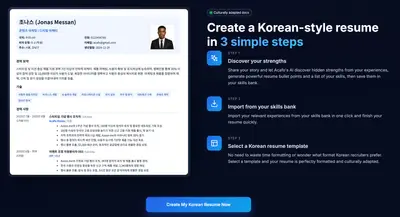
Be one of the first to try this resume-building platform designed specifically for the Korean job market:
Whether you're applying from abroad or already in Korea, having a resume that follows Korean conventions can significantly improve your chances of getting noticed by recruiters.
Conclusion
Breaking into the Korean job market as a foreigner isn't easy, but with the right strategy and preparation, it's absolutely achievable. The key is to approach it with realistic expectations and a clear understanding of how the system works.
Here's what you need to remember:
- Korean language matters. Aim for TOPIK Level 4+ to communicate effectively in the workplace.
- Graduating in Korea gives you a head start through language skills, cultural understanding, and local networks.
- Visa sponsorship has rules. Target companies with 20+ employees to improve your chances under the 5:1 hiring ratio.
- Look beyond the obvious. Export-driven Korean companies need foreigners more than international firms operating in Korea.
- Focus on the right industries: Cosmetics, Pharma, Medical Devices, Mobility, and IT offer the most opportunities.
- Being in Korea physically matters. Companies strongly prefer face-to-face interviews, even if you're here on a tourist visa.
- Do your homework first. Research the market, understand the landscape, then tailor your resume and applications accordingly.
The job search process will test your patience and resilience, but Korea's market is opening up more than ever. With an aging population and increasing global integration, foreign talent is becoming more valued. Now is genuinely one of the best times to pursue opportunities here.
Start smart. Try applying on your own first to understand the challenges. Talk to people who've successfully landed jobs. Learn from their experiences. And most importantly, don't give up after a few rejections, persistence and strategy will get you there.
🏠 Looking for Housing in Korea? Renting Made Easy!
10% Off Service Fee with code:
KIMNINJA10
Enkostay Benefits:
✅ No Deposit ✅ Online Booking ✅ Immigration-friendly docs ✅ Flexible Contracts
Perfect for:
👨🏻💻 Digital Nomads 🎓 Students ✈️ Long-Term Travelers 🧳 Working Holiday
📬 Weekly Tips in Your Inbox
Whether you’re visiting, staying long-term, or relocating. I share honest insights, guides, and tools to help you navigate life in Korea.
Join 1,000+ readers learning how to live smarter in Korea, from visas to vibes.
👋 About Kim Ninja

Kim Ninja (Nguyen Huy Kim)
🧭 Cultural Guide · ✍️ Storyteller · 🎨 Curator
📢 Creator helping foreigners understand and thrive in Korea
🗺️ I turn everyday challenges into comics, guides, and stories
The blog published by Kim Ninja (Huy-Kim Nguyen) is available for informational purposes only and is not considered legal advice on any subject matter.