

Introduction
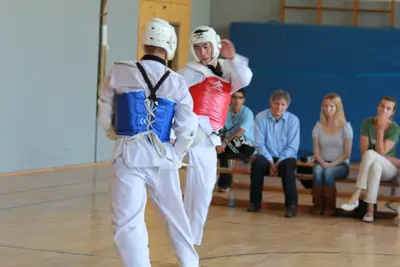
Taekwondo, originating from Korea, has a rich history that culminated in its recognition as an Olympic sport. The 1988 Seoul Olympics played a pivotal role in this journey. During these games, Taekwondo was showcased as a demonstration sport, highlighting the discipline, skill, and cultural significance of this martial art. The impressive display of Korean martial arts captivated the global audience and garnered widespread acclaim. This pivotal moment paved the way for Taekwondo's inclusion as an official Olympic sport in the 2000 Sydney Olympics, solidifying its status on the world stage.
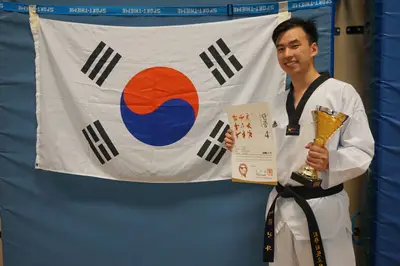
I am a 4th Degree (4th Dan) Black Belt and have been studying Taekwondo for 18 years, ever since I was 7 years old! Taekwondo has been the foundation of my athleticism and even shapes my way of life! It has helped me navigate through tough times and has also instilled in me a sense of persistence. Today, I am excited to share my journey with Taekwondo and my first exposure to Korean culture as an early adopter of the Hallyu wave.
My Journey to Taekwondo
Often, when people ask about my journey to Korea, I'd attribute it to my fascination with Korean dramas and K-Pop. However, my true introduction to Korean culture occurred in 1999 when I became a member of a Taekwondo gym. As a seven-year-old, I was fascinated by Kung Fu movies, with Jackie Chan as my idol. I just wanted to fight like in those movies.
Discovery of Taekwondo
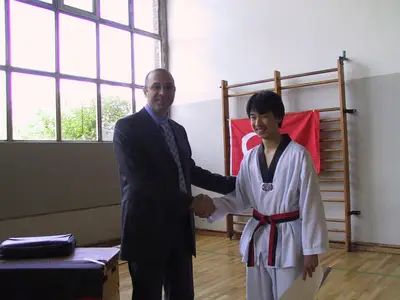
A Taekwondo gym opened just five minutes from my house and I joined along with other neighborhood kids. It was here that I discovered a natural talent for flexibility. My ability to effortlessly perform splits and high kicks outshone other kids who struggled with these moves. For a long time, I did not even understand the need for warming up and stretching.
Learning Korean through Taekwondo
The commands in the gym were given in Korean. I found myself learning the language without fully realizing it, by merely repeating commands. We also learned the numbers and body parts in Korean. When I first entered university and took a Korean class, I realized I already knew a lot of Korean words already!
Korean Term | Hangul | English Meaning |
Cha-ryeot | 차렷 | Attention |
Kyong-ye | 경례 | Bow |
Jun-bi | 준비 | Ready |
Arae makgi | 아래 막기 | Low block |
Ollyo makgi | 올려 막기 | Rising block |
Momtong makgi | 몸통 막기 | Middle block |
Ap chagi | 앞 차기 | Front kick |
Dollyo chagi | 돌려 차기 | Roundhouse kick |
Yeop chagi | 옆 차기 | Side kick |
The Philosophy of Taekwondo
The name "Tae Kwon Do" translates to "the way of foot and fist". It emphasizes high, fast kicks and jumping and spinning kicks, as well as fast kick sequences. Tae Kwon Do also focuses on head-height kicks, jumping and spinning kicks, and fast kicking techniques.
It's a discipline that fuses combat and self-defense techniques with sport and exercise. Taekwondo training enhances physical agility and strength while instilling discipline, respect, and perseverance. It's more than a physical activity; it's a holistic approach to strengthening the mind, body, and spirit.
Taekwondo: A Life Lesson
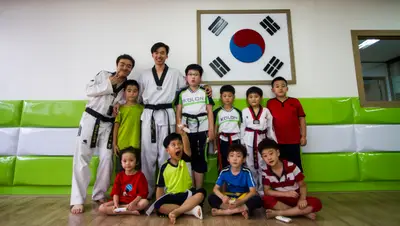
Engaging in Taekwondo from an early age instilled in me a sense of discipline and structure. As my peers began to abandon Taekwondo due to changing priorities, my parents insisted I continue until I earned a black belt. This pattern of persistence against the trend has been a constant in my life.
Taekwondo taught me to weather tough times. My master would not tolerate any signs of weakness, often stating, "It hurts? Good," to motivate us to push past the pain. I was fortunate to be part of a rigorous gym where belt promotions were earned, not given.
Respect was paramount in the gym, whether it was towards elders, masters, or upper belts teaching techniques. Even at a young age, we took on the responsibility of teaching lower belts. Once we learned Forms (Poomsae) or Techniques, we were qualified to teach them. This way, we became both students and teachers, reciprocating knowledge. This process forced us to contemplate our learning and put our skills to use.
Conclusion
In conclusion, starting Taekwondo in Korea can be an enriching journey that goes beyond physical training. It's an opportunity to deeply understand Korean culture, learn the language in a practical setting, and develop invaluable life skills such as discipline, respect, and persistence. Whether you're a beginner or an experienced practitioner, the doors of Taekwondo gyms in Korea are always open to those willing to embrace this dynamic martial art. So lace up your dobok, step onto the mat, and let your own "Hallyu" wave begin with Taekwondo.
🏠 Looking for Housing in Korea? Renting Made Easy!
10% Off Service Fee with code:
KIMNINJA10
Enkostay Benefits:
✅ No Deposit ✅ Online Booking ✅ Immigration-friendly docs ✅ Flexible Contracts
Perfect for:
👨🏻💻 Digital Nomads 🎓 Students ✈️ Long-Term Travelers 🧳 Working Holiday
📬 Weekly Tips in Your Inbox
Whether you’re visiting, staying long-term, or relocating. I share honest insights, guides, and tools to help you navigate life in Korea.
Join 1,000+ readers learning how to live smarter in Korea, from visas to vibes.
👋 About Kim Ninja

Kim Ninja (Nguyen Huy Kim)
🧭 Cultural Guide · ✍️ Storyteller · 🎨 Curator
📢 Creator helping foreigners understand and thrive in Korea
🗺️ I turn everyday challenges into comics, guides, and stories
The blog published by Kim Ninja (Huy-Kim Nguyen) is available for informational purposes only and is not considered legal advice on any subject matter.